Leash Pulling on Every Walk? A Calmer Approach That Actually Sticks
August 30, 2026
Quick Answer: Most dogs pull because pulling has always worked — it gets them to the smell, the dog, or the corner faster, and once that pattern sets in, a dog's neck instinctively pushes back against pressure rather than yielding to it. The fix isn't a stronger arm or a harsher collar; it's consistently rewarding a slack leash and removing forward progress the moment the leash goes tight, paired with equipment that doesn't fight your dog's anatomy. Most households see a real shift within a few weeks of short, focused sessions, with full reliability building over one to three months of consistent practice on every walk, not just training walks.
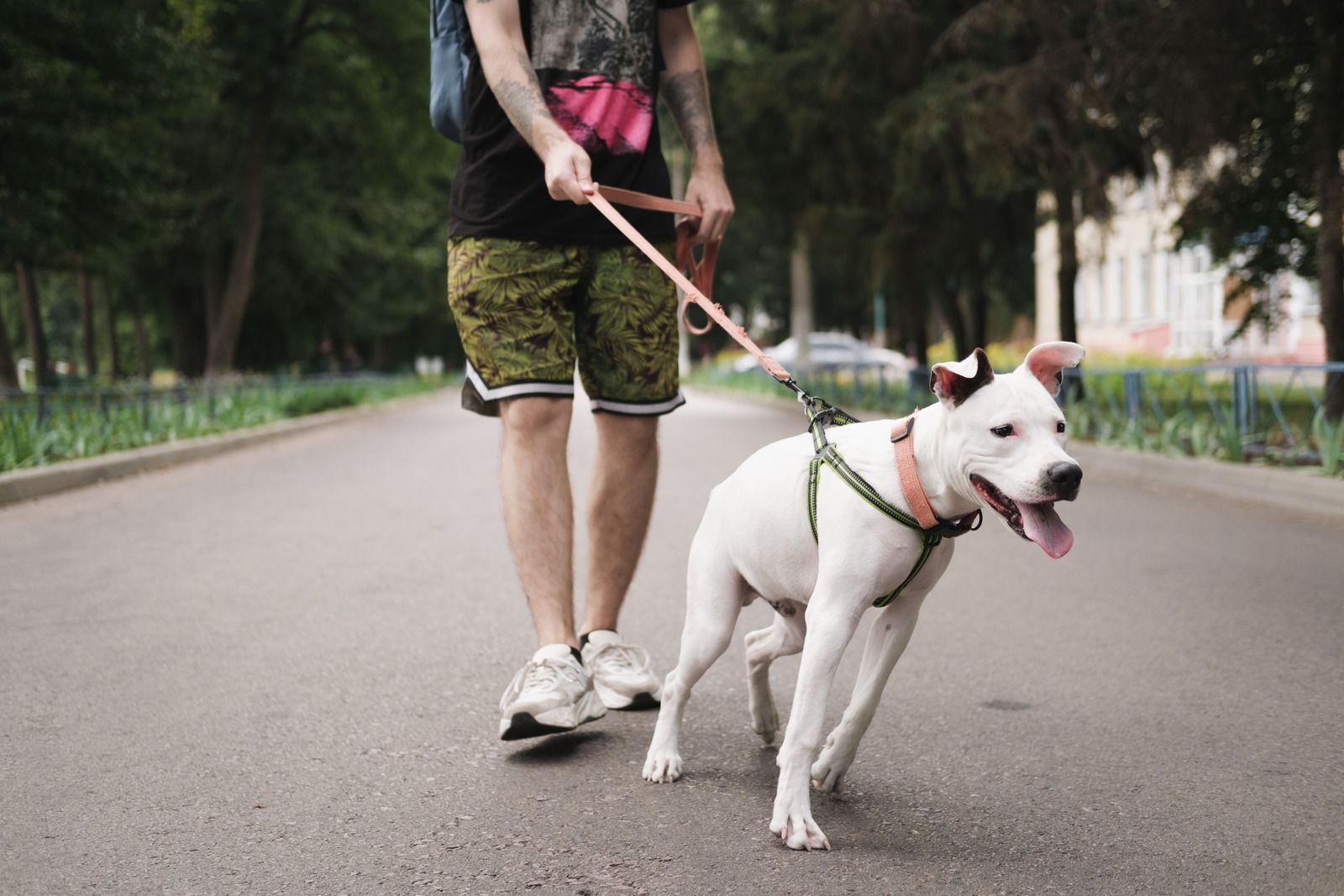
Your shoulder is sore before you've made it to the end of the driveway. The leash is taut, your dog is thirty pounds ahead of you with their nose already at the next mailbox, and you're leaning back just to keep from stumbling. By the time you loop back home, the walk that was supposed to tire your dog out has left you both wound up instead. If this is the pattern every single time you clip on the leash, the issue isn't your dog being "stubborn" or "hard-headed." It's a habit that's been rehearsed, walk after walk, until pulling became the default.
Why Dogs Pull in the First Place
Dogs pull because it works. From your dog's point of view, walking on a leash next to a slower-moving human isn't natural — tethering to a person is a human invention, not something a dog's instincts prepare them for. Left to their own devices, a dog would move at their own pace, stopping to investigate every scent and changing direction on a whim. When your dog surges toward something interesting and that surge gets them closer to it, the behavior gets reinforced. It doesn't matter whether the "something interesting" is another dog, a squirrel, or just the general momentum of getting somewhere — if pulling produces forward progress, your dog will keep doing it.
There's also a physical piece working against you. Dogs have what's often called an opposition reflex: when pressure is applied against their neck or chest, their instinct is to lean into it and push back, not to relax and yield the way we might wish they would. That's why yanking back on a tight leash rarely slows a dog down for more than a second or two — you're triggering the exact reflex that makes them dig in harder. Some breeds carry an added layer here too. Dogs bred for pulling work, or bred with a strong drive to move toward a target, often need more structured leash work from the start, not because something is wrong with them, but because their genetics are working against the habit you're trying to build.
Age and experience matter, too. A young dog or a recently adopted dog that's never had structured leash training doesn't know any other way to walk. An older dog that's pulled successfully for years has an even longer rehearsal history to work against. Neither situation is a lost cause — dogs of any age can learn a new pattern — but it helps to know you're not starting from a
behavior problem so much as an untrained skill.
The Gear You're Using Might Be Working Against You
Before you touch the training itself, take an honest look at what's clipped to your dog.
Flat collars are easy to use and fine for identification, but they do nothing to discourage pulling — if anything, the pressure point sits right where a dog's opposition reflex is strongest, so a hard-pulling dog will keep pulling against a flat collar indefinitely.
Front-clip harnesses attach the leash at the dog's chest instead of the back, so when your dog pulls forward, the harness gently redirects them sideways instead of letting them drive forward with their full body weight. Most dogs adjust to this fairly quickly, and it's a solid starting point for pullers who aren't reactive or explosive on leash.
Head halters
loop around the muzzle and give you more precise control of where your dog's head — and by extension, their body — is pointed. They can be very effective for strong or large dogs, but they need to be introduced slowly, since most dogs find something on their face unfamiliar at first, and a halter should always be paired with a backup leash attached to a harness or collar in case your dog lunges suddenly.
Warning: Choke, slip, and prong collars work by creating discomfort when the leash tightens, and the amount of pressure needed to stop a determined puller is often more than owners realize. Beyond the risk of neck and tracheal injury from repeated or forceful corrections, there's a subtler problem: if your dog is pulling toward another dog or a person and that pulling triggers a painful correction, your dog can start associating the correction — not the pulling — with whatever they were looking at. That's a fast way to turn simple leash excitement into fear or defensiveness toward other dogs and people, which is a much harder problem to unwind later.
And retractable leashes deserve a mention here too, even though they're not really a training tool at all. The constant tension on a retractable line keeps a dog's opposition reflex engaged for the entire walk, and the sudden stop-and-lock action can cause real injury to hands, wrists, and a dog's neck if they hit the end of the line at a run. Skip it. A standard four-to-six-foot leash gives you far more control and far more consistent feedback while you're training.
Building a Loose Leash That Actually Holds Up
Loose-leash walking is teachable at any age, and it's simpler than it looks on paper. The hard part isn't the mechanics. It's staying consistent long enough for the new pattern to actually stick.
Start indoors or in the yard, not on the sidewalk
Clip on the leash somewhere with zero distractions and reward your dog for simply standing near you with slack in the leash. You're not asking for a formal heel yet — you're teaching your dog that staying close to you is what makes good things happen.
Reward the position you want, not just the absence of the one you don't
The moment your dog is beside or slightly behind you with a loose leash, mark it and deliver a treat at your side, right where you want them to keep walking. If you only correct pulling without rewarding the alternative, your dog has no clear picture of what "right" actually looks like.
Become a tree the instant the leash goes tight
When your dog pulls, stop moving entirely. Don't yank, don't repeat commands, don't drag them back — just stand still. Forward motion is the reward your dog is after, and taking that reward away the second the leash tightens is what teaches the connection. Once the leash goes slack again, even briefly, reward it and resume walking.
Change direction instead of fighting for ground
If your dog surges ahead, turn and walk the opposite way rather than trying to out-muscle them. This reinforces a dog's natural instinct to stay with their person, and it breaks the rehearsed pattern of "pull, get pulled forward" that's been reinforcing the behavior all along.
Put it on a cue once the pattern is reliable indoors
A simple word like "with me" or "let's go," said in a calm, upbeat tone right before you start walking, gives your dog a clear signal that the loose-leash rules are in effect. Consistency in when and how you use the cue matters more than the specific word you pick.
Tip: Keep early sessions short — five to ten minutes of focused practice beats a full 45-minute walk where your dog spends the whole time rehearsing the pull. As your dog's reliability improves, gradually add real-world distractions: a quiet street first, then a busier one, then somewhere with other dogs around. Rushing straight to a crowded park undoes weeks of indoor progress in a single outing.
Working Around Tampa Bay's Heat, Humidity, and Storm Patterns
Leash training here comes with a few local wrinkles that owners in cooler, drier climates don't have to think about. Valrico and the greater Tampa Bay area run hot and humid for most of the year, and asphalt and concrete hold heat well past what feels comfortable to a barefoot dog — a quick palm test on the pavement before you head out will tell you more than the air temperature alone. Early morning and evening walks aren't just more pleasant for you; they're often the only time of day paws and lungs aren't working overtime against the heat, which matters when you're also asking your dog to concentrate on a new skill.
Humidity adds its own drag on training sessions. A dog that's already panting heavily from the heat has less bandwidth for learning something new, so shorter, more frequent sessions tend to outperform one long walk in the thick of a July afternoon. And with Tampa Bay's predictable pattern of afternoon thunderstorms building through the warmer months, it's worth planning training walks around the forecast rather than around convenience — a storm rolling in mid-session doesn't just cut the walk short, it can also spook a dog who's still building confidence and set your progress back further than the missed practice time alone would suggest.
What Progress Actually Looks Like
Loose-leash walking rarely improves in a straight line. Expect good days and frustrating ones, especially as you introduce new environments and distractions. A dog that walks beautifully in a quiet cul-de-sac may revert to old habits the first time a rabbit crosses the yard three houses down — that's not a failure of the training, it's a sign you've found the next distraction level to work through. Every family member who walks the dog needs to use the same rules and the same cue, because a dog that gets away with pulling on one walker's watch will keep testing that boundary with everyone else.
Patience matters more than intensity here. A dog that's rehearsed pulling for two or three years didn't build that habit in a week, and it won't unwind in a week either.
What tends to move fastest, in our experience, is switching to the right equipment right away. That one change removes some of the physical reward pulling used to provide, even before the training itself catches up.
Frequently Asked Questions
How long does it usually take to stop a dog from pulling on the leash?
Most owners notice improvement within two to four weeks of consistent practice. Reliable loose-leash walking around everyday distractions often develops within one to three months, depending on experience and temperament.
Is a harness or a collar better for a dog that pulls?
A front-clip harness is often better for pulling because it redirects forward movement. Larger, stronger dogs may benefit from a properly introduced head halter, while flat collars provide less control.
Can an older dog still learn to walk on a loose leash?
Yes. Older dogs can learn loose-leash walking successfully, although established pulling habits may require additional repetition. Consistently rewarding slack and stopping forward movement when tension develops helps build better habits.
Why does my dog pull worse toward other dogs than anywhere else?
Excitement, frustration, or uncertainty can increase pulling around other dogs. Creating comfortable distance and rewarding calm behavior helps your dog gradually learn to stay focused without becoming overwhelmed during encounters.
Should I stop walks entirely during Tampa's hottest afternoon hours?
During Tampa's hottest afternoons, shifting walks to mornings or evenings is safer. Heat and humidity reduce concentration, while hot pavement can burn paw pads, making focused leash training more difficult.
Will a no-pull harness fix the problem on its own?
A no-pull harness can make pulling less effective and training easier, but equipment alone will not teach loose-leash walking. Consistent rewards, stopping when tension develops, and regular practice remain essential.
Building Better Walks Through Consistent Leash Habits
Loose-leash walking becomes easier when every walk follows the same clear expectations. Rewarding slack in the leash, stopping when pulling begins, and practicing around distractions gradually teaches dogs that calm movement is more rewarding than rushing ahead. At Train To Sustain in Valrico, FL, our 15+ years of experience have shown that steady repetition matters more than force. Progress may vary from walk to walk, but consistent handling helps the calmer pattern become familiar and dependable over time.
The goal is not to keep a dog perfectly at your side every second, but to create walks where both dog and handler can move comfortably without constant tension. The right equipment can make that process easier, while short training sessions help reinforce the behavior without overwhelming the dog. As loose-leash skills improve, everyday walks become less physically demanding and more predictable, allowing dogs to explore their surroundings while still understanding that a relaxed leash is simply part of walking together.