Why Your Dog Comes When Called Indoors but Ignores You Outside
July 30, 2026
Quick Answer: Most dogs that come when called indoors but ignore the same word outside were never really taught to do it outdoors, and the outside world is full of competing rewards the living room does not have. Dogs do not automatically apply a cue from one place to another, so "come" learned in the kitchen can feel like a brand new word in the yard. The fix is not louder repetition, it is rebuilding recall step by step in tougher settings, on a long line, with rewards worth leaving a distraction for. It also means keeping the word safe, so it never predicts punishment or the end of all the fun. Framed as training and management rather than a quick fix, a reliable outdoor recall is very achievable for most dogs.
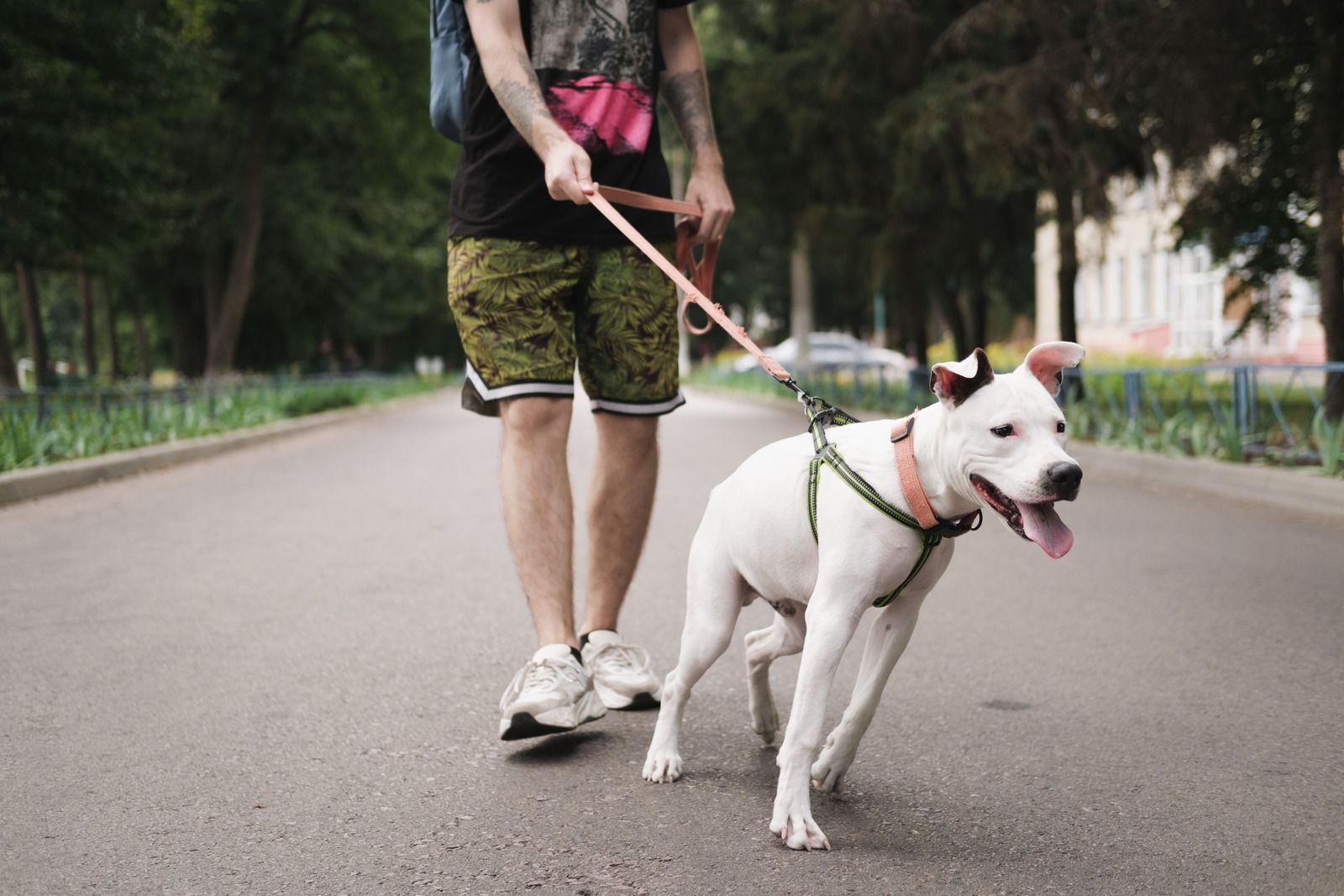
You open the back door, your dog trots past you into the yard, and the word "come" seems to bounce off him like you never said it. Ten minutes earlier, in the kitchen, that same word spun him around at your feet. If that split personality sounds familiar, your dog is not being stubborn or spiteful, and you are not failing him.
This is one of the most common things owners describe, and around Tampa Bay it plays out in humid backyards, at Valrico parks, and on trails full of lizards and squirrels. The pattern has a clear explanation and a clear plan behind it. Once you understand what the outdoors is really doing to your dog's attention, the fix stops feeling like a battle of wills.
Why "Come" Works Inside and Falls Apart Outside
Dogs learn in pictures, not words
A dog does not hear "come" as an abstract command that applies everywhere. He learns it wrapped in a whole picture: the kitchen, your body language, the quiet, the treat jar on the counter. Change the picture to a wide open yard and the cue can genuinely feel new to him. Trainers call this a failure to generalize, and it is ordinary dog learning, not defiance.
Outside is a competing menu
Indoors, you are the most interesting thing in the room. Outdoors, you are up against smells, other dogs, birds, and blowing leaves, each one offering its own reward right now. When "come" means leaving all of that behind, the word has to be worth more than the distraction, or it loses.
The word was never trained where it fails
Many dogs practiced recall hundreds of times indoors and almost never in the yard or at the park. So the cue is strong in one setting and weak in the others. That gap is the missing piece, and closing it is a training project, not a personality problem.
The Missing Piece: Proofing, Not More Repetition
Add difficulty in the three D's
Trainers build reliability by raising three things one at a time: distance, duration, and distraction. Ask for recall a few feet away in a quiet yard first, then slowly add distance, then hold, then the tempting stuff. Piling on all three at once is what makes recall collapse.
Make the word worth it
Outdoors, a dry "good dog" rarely beats a squirrel. Early on, pay recall with something your dog finds genuinely exciting, a favorite treat, a game of tug, an enthusiastic burst of praise, so coming back becomes the best available option.
Protect the cue
If "come" reliably ends the fun, means a bath, or leads to a scolding, a smart dog learns to hesitate. Trainers call this poisoning the cue. Call your dog for good things far more often than for anything he dislikes, and sometimes reward him and release him right back to play.
Tip: Keep a small pouch of high-value rewards by the back door and pay a few easy recalls every time you head into the yard for a week. Ordinary trips outside quietly become recall practice, and the word starts to mean something great is about to happen.
A Step-by-Step Way to Rebuild Recall Outdoors
Start where it is easy
Begin in the least distracting outdoor space you have, a quiet yard early in the day. Reliability built in calm settings gives you something to stretch into busier ones.
Use a long line for safety and honesty
A light long line of roughly 15 to 30 feet lets your dog feel free while you stay connected. It prevents the rehearsal of ignoring you, since he cannot simply bolt, and it keeps him safe near roads and water while the recall is still a work in progress.
Raise the bar in small steps
Add one challenge at a time. More distance one session, a mild distraction the next, a slightly busier spot after that. If recall breaks down, you have a clear sign to make the next repetition easier rather than harder.
Pay generously, then fade slowly
In the beginning, reward every recall like it mattered, because it did. As the response gets solid across settings, you can shift to rewarding less predictably, which actually keeps the behavior strong over time.
Working With Tampa Bay Weather and Real Life
Respect the heat and humidity
Summer here is hot and sticky, and dogs shed heat far less efficiently than people do. Train recall in the cooler edges of the day, early morning or evening, keep sessions short, offer water, and use shade. A dog that is overheating cannot focus, and pushing through the midday heat helps no one.
Plan around storm season
Afternoon thunderstorms roll through much of the year, and the noise, wind, and pressure can rattle even steady dogs. Do not try to prove a recall in the middle of a storm. Instead, treat distant thunder or a breezy, unsettled day as one more distraction to work under gently, at a level your dog can handle.
Get the whole household consistent
If one person rewards recall and another calls the dog only to crate him, the word sends mixed messages. Agree on one recall word, one set of rules, and a shared habit of paying up, so your dog hears the same clear promise from everyone.
Warning: Do not test an unfinished recall off leash near traffic, open water, or wildlife. Until your dog comes reliably around real distractions on a long line, an off-leash "come" that fails in the wrong spot can put him in danger. Keep the long line on until the behavior has proven itself across many settings, not just once or twice.
When a Little Outside Help Makes Sense
When the same pattern keeps repeating
If weeks of honest practice are not moving the needle, a trainer can spot the small handling habits that are quietly holding your dog back. That is a normal part of the process, not a sign you did something wrong.
When distractions tip into bolting or reactivity
Some dogs do not just ignore recall, they fixate on wildlife, bolt toward the road, or react hard to other dogs. Those patterns are best handled as structured training and management, with a plan built around your specific dog rather than generic advice.
When you want a faster, clearer path
Coaching that includes you, not only the dog, tends to stick, because you are the one out in the yard every day. A trainer who works in your real environment can shorten the trial and error and give you a plan you can actually keep up.
Frequently Asked Questions
Why does my dog come inside but not outside?
Because dogs do not automatically apply a cue from one place to another, and the outdoors is packed with competing rewards. The word "come" was likely trained mostly indoors, so it stays strong there and weak in the yard until you practice it outside on purpose.
How long does it take to fix outdoor recall?
It depends on your dog's age, history, and how consistent the practice is. Many dogs show clear progress within a few weeks of short, regular sessions, while a rock solid recall around heavy distractions develops over months of steady work rather than overnight.
Should I punish my dog for not coming when called?
No. Punishing a dog after he finally comes teaches him that returning to you is risky, which weakens recall. Keep the word tied to good outcomes, reward the return every time early on, and set the situation up so ignoring you is not an easy option.
What is a long line and why should I use one?
A long line is a light leash of roughly 15 to 30 feet that gives your dog freedom to move while you stay connected. It keeps him safe near roads and water, stops him from practicing the habit of blowing you off, and lets you rebuild recall at a realistic distance.
Can an older dog learn a reliable recall?
Yes. The idea that older dogs cannot learn is a myth. Adult and senior dogs build new recall habits all the time, and you simply adjust the pace and keep sessions short and rewarding to fit the dog in front of you.
Is it ever too hot to train recall in a Tampa Bay summer?
During the hottest part of a humid summer day, yes, it is better to wait. Train in the early morning or evening, keep sessions brief, provide water and shade, and watch for heavy panting or a dog that checks out, which is a signal to stop and cool down.
Building a Recall Your Dog Trusts Anywhere
A dog that listens indoors already has the foundation; he just has not been shown that the same word applies out where life is loud and interesting. Rebuilding recall outdoors is patient, structured work, a little every day, on a long line, with rewards that beat the competition and a word you keep safe. None of it requires shame or force, and most dogs get there with a clear plan and a handler who stays consistent. Train To Sustain has spent 15+ years helping dogs in Valrico, Florida, make exactly this leap.
Progress rarely arrives in a straight line, especially through a Tampa Bay summer of heat and storms. Keep sessions short, keep them positive, and stack up small wins in easier settings before you ask for more. The dog spinning at your feet in the kitchen can become the dog who turns on a dime in the yard, given the chance to learn the word all over again outside.